Bar soap is made either by saponifying oils, mainly palm oil and palm kernel oil, much of it imported, with caustic soda, or by finishing ready-made soap noodles. Because equipment travels inland from Mombasa or Dar es Salaam, landed and installed costs run at about 1.45–1.60 times ex-works. Capital goods usually enter duty-free under the EAC CET, but VAT is 18% and regulated goods need UNBS pre-shipment verification. Soaps sold in shops are expected to meet UNBS standards. CISH supplies, installs and commissions complete soap and detergent lines in Uganda.
Soap making machine prices in Uganda, 2026
| What you buy | Capacity | Indicative price (2026) | Fits |
|---|---|---|---|
| Washing-powder blending set | 50–500 kg per batch | About US$3,000–45,000 | Detergent powder packers |
| Liquid detergent mixing and filling set | Batch tanks, small filler | About US$20,000–60,000 | Liquid soap and dishwashing liquid |
| Soap noodle finishing line | 100–500 kg an hour | About US$20,000–100,000 | Bar soap from bought-in noodles |
| Complete bar soap line | 300–1,000 kg an hour | About US$150,000–400,000 | Bar soap from oils |
| Spray-dried washing powder tower | Tonnes an hour | Quoted per configuration | Large detergent makers |
Noodles or oils?
| Finishing noodles | Saponifying oils | |
|---|---|---|
| Raw material | Imported or local soap noodles | Palm oil, palm kernel oil, tallow, caustic soda |
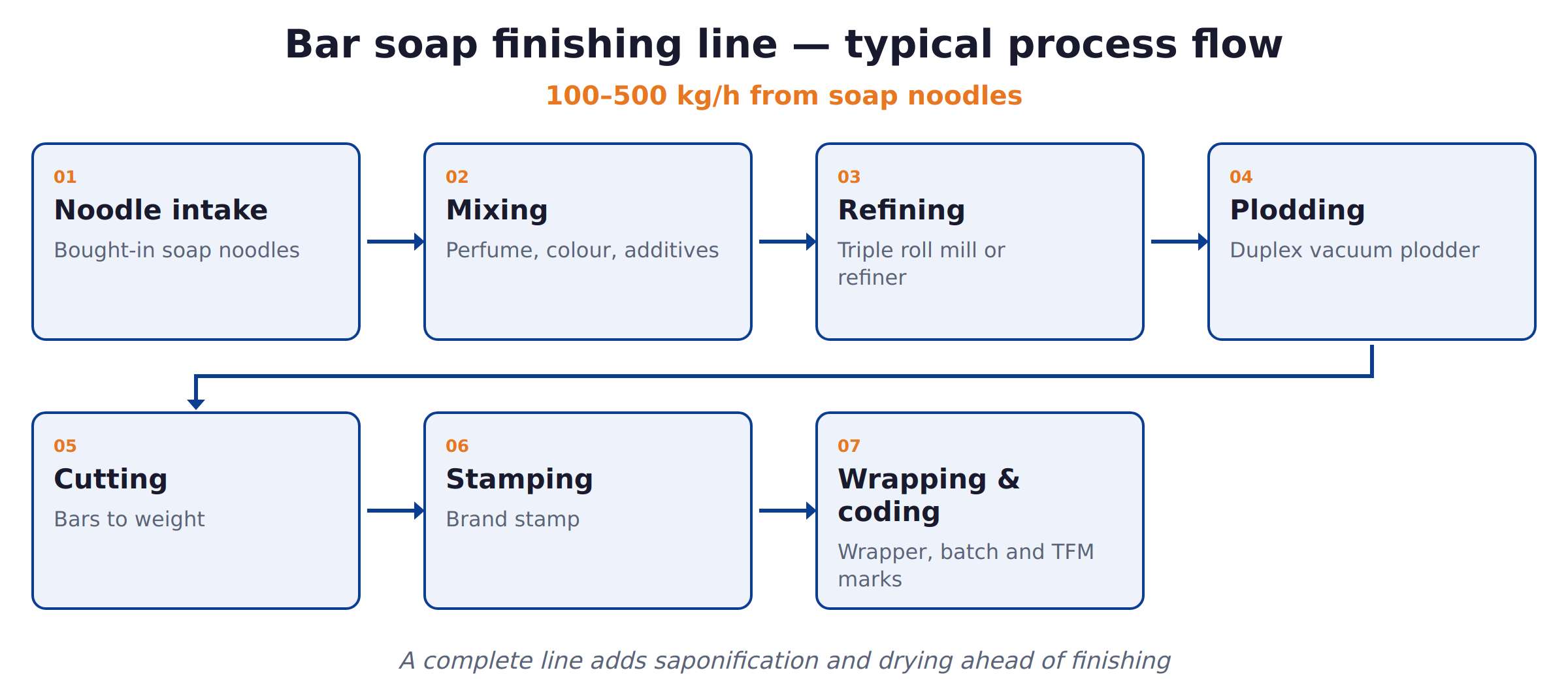
| Process | Mix, refine, plod, cut, stamp, wrap | Saponify, dry or cool, then finish |
| Investment | Lower | Higher |
| Control of cost | Noodle price decides | You control the formula and oil buying |
| Skills | Moderate | Higher: chemistry, steam, safety |
Most new bar soap businesses start with noodles. Saponification pays at larger volumes and when oil can be bought well.
Raw materials
Palm oil and palm kernel oil are the main soap oils, and much of the supply is imported, so prices follow world markets and the shilling. Caustic soda, salt, silicate, fragrance and colour complete the formula for bars. Liquid soap uses surfactants, salt, thickeners, preservative and fragrance. Buy from reliable suppliers, test deliveries, and store caustic soda safely.
Standards and labels
Soaps sold in Ugandan shops and supermarkets are expected to meet UNBS standards, and many buyers ask for the UNBS Q-Mark, which involves product testing and factory inspection. Label each bar or pack with the product name, net weight, batch and your details.
Power and steam
Mixers, plodders and pumps need electric power, and saponification needs steam or heating. Since UEDCL took over distribution in 2025, approved first-quarter 2026 tariffs were about UGX 203.6 per unit for extra-large industrial users and about UGX 300.4 for large industrial users. Plan backup for critical motors.
Importing a soap line into Uganda
| Item | 2026 basis |
|---|---|
| Duty | 0% for capital goods under the EAC CET; confirm the HS code |
| VAT | 18% |
| UNBS PVoC | Pre-shipment verification for regulated goods |
| Route | Mombasa or Dar es Salaam, then inland |
| Landed factor | About 1.45–1.60 times ex-works |
Worked example: a laundry bar line in Jinja
A trader in Jinja buys laundry bars from Kenya and sells them to shops in eastern Uganda. He sets up a noodle finishing line of about 300 kg an hour with a mixer, a duplex plodder, a cutter and a stamper, buys laundry noodles, and applies for UNBS certification. Long bars are cut into pieces and wrapped for shops. Two years later, with steady sales, he plans a saponification section to make his own noodles from palm oil. The figures are illustrative.
How to compare quotes
- Kilograms of finished soap per hour.
- Saponification method, if included.
- Refiner and plodder sizes.
- Cutting and stamping for your bar sizes.
- Wrapping or packing.
- Steam and power needs.
- Installation, commissioning on your materials, and training.
- Spares: screws, dies, cutters.
- References in East Africa.
Choose by situation
- Liquid soap starter: a mixing and filling set.
- Bar soap starter: a noodle finishing line.
- Growing bar soap brand: a complete line with saponification.
- Detergent powder packer: a blending set and packing machine.
Running costs and margins
Cost per bar is mainly noodles or oils, then caustic soda, fragrance, packaging, power, labour and transport. Weigh bars accurately and keep cutting waste low; offcuts can go back to the plodder. Compare with shop prices for long bars and toilet soaps in the towns you will supply.
What we see in Uganda
- Long laundry bars are the core product.
- Liquid soap is growing in towns.
- Soap oils are largely imported.
- UNBS standards apply to products in shops.
- Corridor freight from the coast adds to imported soap lines.
- Soap lines usually enter without duty, with VAT at 18%.
Cutting long bars into pieces
Much laundry soap in Uganda is sold as long bars that shops cut into smaller pieces for customers. That shapes production: the plodder extrudes a continuous bar, a cutter cuts it to the long-bar length, and the bar is often marked so it can be broken evenly. Bars must be hard enough to cut cleanly and not crack, which depends on moisture, the oil blend and how long bars are left to set before packing. Producers who get the long bar right, firm, evenly coloured and lathering well, keep shop customers loyal.
Quality checks for bar soap
Test total fatty matter and moisture regularly at a laboratory, because they decide how long a bar lasts in use and are what standards and buyers look at. Check free alkali, which must be low so soap does not harm skin or clothes. Weigh bars and record batch numbers. Keep retained samples, so a complaint can be checked against the bars that were actually sold.
Liquid soap and detergents
Liquid soap, dishwashing liquid and multipurpose cleaners are growing in Kampala and other towns, sold in bottles to households and in jerrycans to schools, hotels and offices. The equipment is simpler than a bar soap line: mixing tanks, a filler and a capper. Many bar soap makers add liquids to use the same customers and distribution, and many new businesses start with liquids before investing in bars.
Choosing a site
A soap factory needs water, drainage, three-phase power and a safe store for caustic soda and fragrances, with road access for raw materials and deliveries.
Where CISH fits
We supply complete soap and detergent lines, noodle finishing, saponification, liquid mixing and filling, from audited factories in China, sized to your products and output. CISH ships through Mombasa or Dar es Salaam, clears, installs and commissions the line on your materials, and trains your team. For simple tanks and moulds, a Katwe workshop is usually the better buy.