In Nigeria the power decides the plant more than the machine does: with about 5.4 GW of grid capacity available nationally and manufacturers spending around ₦1.4 trillion on their own power in 2025, most ice block businesses run on diesel generators, solar or both.
Ice block machine prices, 2026
| What you buy | Capacity | Indicative price (USD, 2026) | Note |
|---|---|---|---|
| Small ice block machine | About 1–5 t/day | Below the 10-tonne band | Brine tank, cans and compressor; often bought by pure water and drinks sellers |
| Ice block machine, brine type | About 10 t/day | US$10,000–45,000 ex-works China | Containerised units with storage at the top of the range |
| Cold room for ice storage | Two to three days of sales | From about US$15,000 installed | See our cold room price guide |
| Solar-powered ice block plant | Any | Quoted per configuration | Solar array and batteries often cost more than the machine |
| Complete ice block plant | Water treatment, machine, storage, generator | Quoted per configuration | Building, power and delivery vehicles extra |
Prices are in US dollars; naira costs move with the exchange rate, which is why we quote equipment in USD.
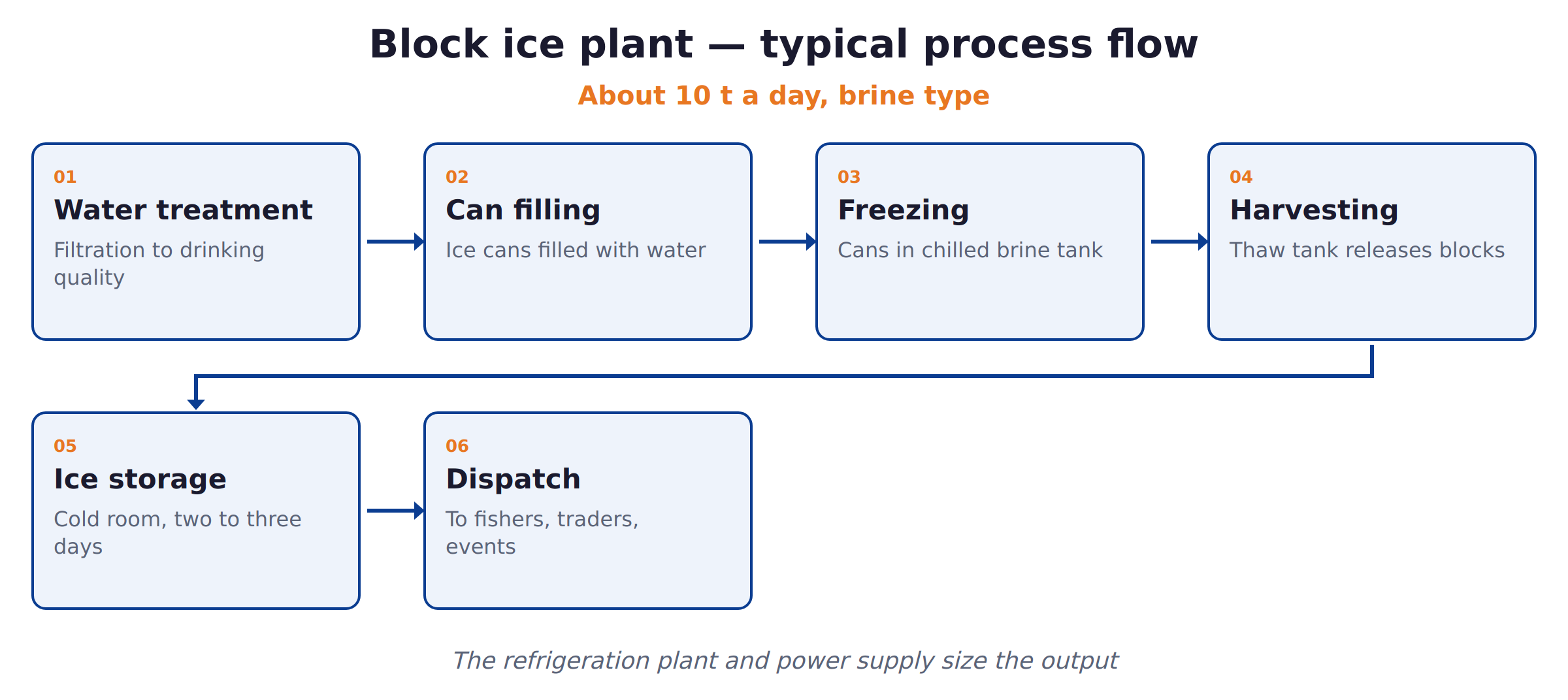
What "ice block" means in Nigeria
In Nigeria, "ice block" usually means block ice frozen in cans in a brine tank and sold to drinks sellers, fish and meat traders, event caterers and households for coolers. The buyers want hard blocks that last through a hot afternoon, delivered early. That is different from tube ice in bags, sold to supermarkets, and from flake ice used inside processing plants.
Who sells ice block machines in Nigeria
- Local fabricators and refrigeration workshops build brine tanks and cans and install compressors; good for small units and repairs.
- Importers and dealers sell Chinese machines from stock or order, sometimes with installation.
- Chinese factories direct sell machines and containerised plants on online platforms; you organise Form M, shipping, clearance and installation.
- Turnkey companies deliver the plant with water treatment, storage, power and commissioning.
Ask every seller who installs the refrigeration, who charges the refrigerant, and who comes when the compressor trips at midnight.
Power: the decision that sizes the plant
| Option | Strength | Watch out for |
|---|---|---|
| Grid only | Lowest running cost when supply is steady | Supply is unreliable in most locations; blocks melt when the compressor stops |
| Diesel generator | Available anywhere | Fuel is the largest running cost; size the generator for compressor starting current |
| Solar with batteries | Low running cost once installed | High capital; the array must cover daytime freezing and battery charging |
| Hybrid grid, solar and diesel | Resilient | More equipment to maintain |
Ask each supplier for the machine's electrical load and kWh per tonne of ice, then cost each option at your local diesel and tariff prices. A cheap machine that uses more power can cost more within a year.
The cheap machine versus the plant that sells ice
A machine on a listing makes ice in a factory test. A business that sells ice blocks also needs clean water (treated where the source needs it), enough ice cans to fill the tank, a crane or hoist to lift cans in larger plants, storage that keeps blocks hard until morning delivery, and a vehicle. Most first-time buyers under-budget storage and power.
Landed cost in Nigeria
| Cost item | How to plan it |
|---|---|
| Machine | Ex-works or FOB price |
| Freight and insurance | To Lagos or your nearest port |
| Import duty | Production machinery generally falls in the lower ECOWAS CET bands; confirm the HS code |
| Charges on duty and value | Surcharge of 7% of duty, CISS of 1% of FOB and ETLS of 0.5% of CIF |
| Import VAT | 7.5% on the value plus duties and charges |
| Clearance, port and transport | Agent and port fees, trucking to site |
| Installation and commissioning | Often not in a listing price |
Plan roughly 1.25–1.45 times the equipment price landed and installed for a coastal market. The 4% FOB charge introduced in 2025 was later suspended; confirm the current position with your clearing agent before you budget.
How to compare ice block machine quotes
Ask each supplier for:
- Tonnes of ice per day at your ambient temperature, not the factory rating.
- Block size and freezing time per batch.
- Number of cans and whether a crane is included.
- Compressor make, refrigerant and condensing type.
- Electrical load and kWh per tonne.
- Brine tank insulation and material.
- Storage included or not.
- Installation, commissioning and training.
- Warranty and who services it in Nigeria.
- A plant you can visit.
Nigerian facts that shape the decision
- Power. NERC's 2025 third-quarter report shows about 5.4 GW of available grid capacity for a country of more than 200 million people; manufacturers spent about ₦1.4 trillion on self-generated power in 2025, according to the Manufacturers Association of Nigeria.
- Finance. The Central Bank of Nigeria's maximum lending rate stood at about 33.16% in mid-2026, so plant size and payback deserve care.
- Duties. Nigeria applies the ECOWAS Common External Tariff, with five bands from 0% to 35%; machinery usually falls in the lower bands.
- Import process. Customs has moved Form M processing onto the B'Odogwu trade portal; build time for the transition into your schedule.
- The 4% FOB charge. It was introduced, withdrawn, reintroduced and then suspended by the Customs Service; confirm its status at the time you import.
- Food rules. Ice for consumption is food; check with NAFDAC what registration and premises requirements apply, as they do for packaged water.
Where CISH fits
CISH supplies, installs and commissions complete ice block plants from audited factories in China, sized on your hot-season sales and the power you really have, with water treatment, storage and commissioning included. We also help with the import documentation, shipping and clearance into Nigeria. For a single small machine, a local dealer may suit you better.