Fish feed that floats needs an extruder rather than a pellet mill; single extruders cost about US$2,000–60,000 by size. Raw materials, maize and maize bran, soya or soybean cake, cotton seed cake, mukene (silver fish) and premixes, are most of the cost, so buying and formulation decide the margin, and aflatoxin control decides whether farmers come back. Feeds sold in shops are expected to meet UNBS standards. Imported mills usually enter duty-free under the EAC CET, with 18% VAT, and land at about 1.45–1.60 times ex-works after the corridor from Mombasa or Dar es Salaam. CISH supplies, installs and commissions complete feed mills in Uganda.
Step 1: choose your feeds
| Animal | Common feeds | Form |
|---|---|---|
| Layers | Chick mash, growers mash, layers mash | Mash, sometimes pellets |
| Broilers | Starter, grower, finisher | Crumbles and pellets |
| Pigs | Creep, weaner, grower, sow and boar | Mash or pellets |
| Fish | Starter and grower feeds for tilapia and catfish | Floating extruded pellets |
| Dairy | Dairy meal, calf feeds | Mash or pellets |
Start with the feeds your nearest farmers buy most, often layers mash and pig feeds.
Step 2: raw materials and formulation
- Energy: maize, maize bran, rice bran.
- Protein: soybean or soya cake, cotton seed cake, sunflower cake, mukene.
- Minerals and vitamins: limestone or lake shells, phosphate, salt, premixes.
Work with an animal nutritionist to set formulas and review them as prices change. Maize bran and mukene vary in quality; test protein and moisture, and test maize and bran for mould and aflatoxin, which harms animals and can reach eggs and milk. Store raw materials dry, off the floor, with pest control.
Step 3: mill sizes and costs
| Mill | Output | Indicative cost (2026) | Fits |
|---|---|---|---|
| Local hammer mill and mixer | Farm scale | A small part of a feed mill project | Farmers and small mixers |
| Complete small feed mill | 1–3 t/h | About US$60,000–150,000 landed and commissioned | County and district feed businesses |
| Medium feed mill | 3–10 t/h | About US$250,000–900,000 | Regional brands |
| Fish feed extruder | By size | About US$2,000–60,000 per machine | Fish feed makers |
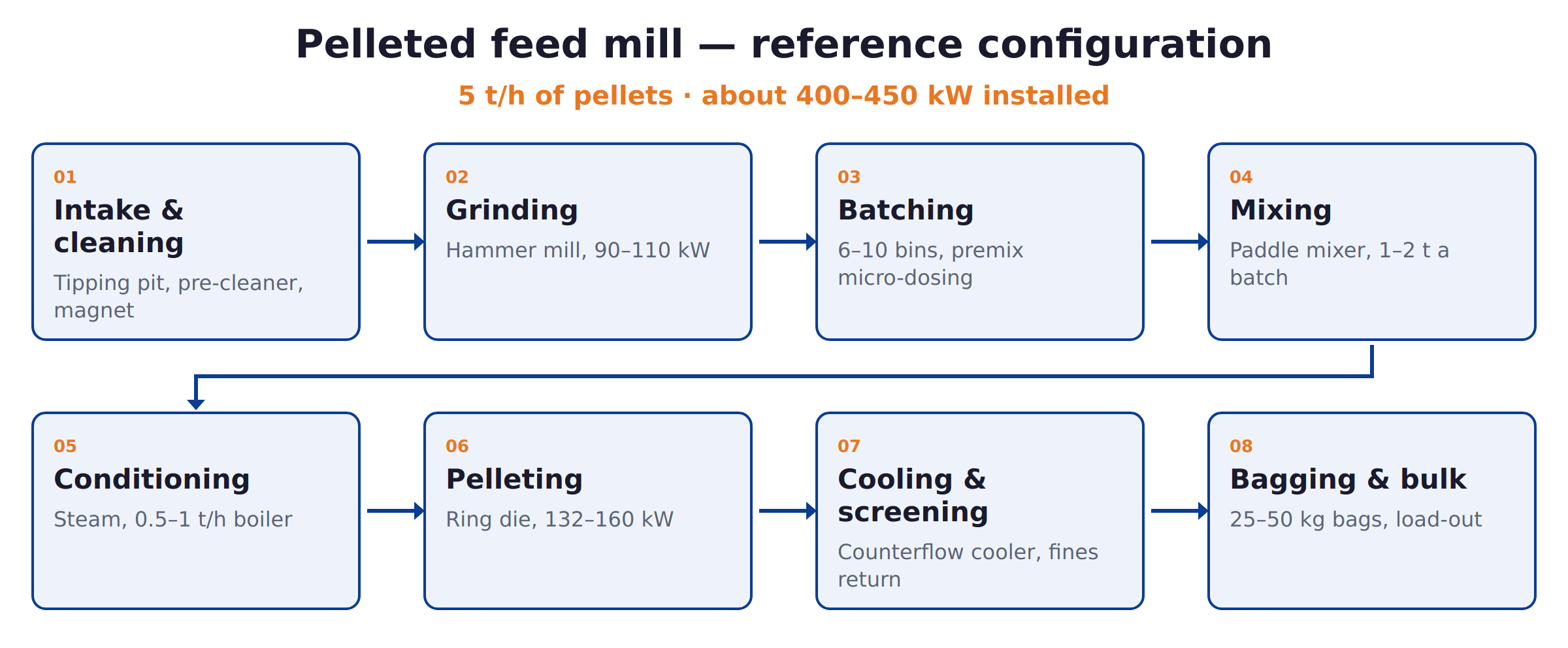
A complete mill includes intake, grinding, batching scales, mixing, premix dosing and bagging; pellet feeds add conditioning with steam, a pellet mill, a cooler and a crumbler. Our animal feed machine guide compares pellet mills and extruders, and our Kenya feed machine guide shows how a neighbouring market buys.
Step 4: standards and quality
Feeds sold to farmers through shops are expected to meet UNBS standards for animal feeds, with labels showing feed type, main nutrients, net weight and batch. Keep a sample from every batch, record which raw material lots went into it, and test finished feeds regularly.
Step 5: power
Hammer mills and pellet mills are heavy electricity users. After UEDCL took over distribution in 2025, approved first-quarter 2026 tariffs were about UGX 203.6 per unit for extra-large and UGX 300.4 for large industrial users. Keep hammers and screens in good condition, and plan backup for critical motors.
Step 6: importing a mill
Capital goods usually enter Uganda at 0% under the EAC CET, with 18% VAT; regulated goods need UNBS pre-shipment verification. Equipment travels via Mombasa or Dar es Salaam and then inland; budget about 1.45–1.60 times ex-works landed and installed.
Step 7: sell to farmers
Most feed reaches farmers through agro-input shops and direct sales from the mill. Support farmers with feeding advice, consistent quality and reliable supply; poultry farmers notice a drop in egg production within days of a poor batch. Supply large farms directly in bulk, and keep prices clear.
The numbers
Cost per bag is raw materials (usually most of it), premix, bags, power, labour, maintenance, transport and finance. Track cost per bag every month as maize, bran and cake prices change, and adjust formulas with your nutritionist rather than cutting nutrients.
Finance and policy
The 2026/27 budget put about UGX 2.2 trillion behind agro-industrialisation, and lenders finance agro-processing projects with clear plans. A mill sized to confirmed demand, with a landed budget in writing, is easier to finance.
Worked example: a poultry feed mill in Wakiso
A poultry farmer in Wakiso mixes feed for his own layers on a hammer mill and mixer, and neighbours ask to buy it. He hires a nutritionist, sets formulas for chick, growers and layers mash, and installs a 2 t/h mash mill with batching scales, a ribbon mixer, a premix doser and a bagging scale. He tests maize bran and mukene for every delivery, applies for UNBS certification and sells through three agro-input shops. A pellet line for broiler feed follows a year later. The figures are illustrative.
Common mistakes
- No nutritionist.
- Untested raw materials: mould and low protein.
- Inaccurate batching.
- Pellet mill without conditioning.
- Selling on credit without control.
What we see in Uganda
- Poultry and pig feeds are the largest products.
- Fish feed is growing with tilapia and catfish farming.
- Maize bran and mukene are common raw materials.
- Local workshops make hammer mills and mixers.
- UNBS standards apply to feeds sold in shops.
- Feed mills usually enter at 0% duty, and VAT is 18%.
Fish feed for tilapia and catfish
Fish farming around Lake Victoria and in ponds across Uganda has created demand for fish feed. Floating pellets, which stay on the surface so farmers can see fish feeding, need an extruder and a dryer rather than a pellet mill. Fish feeds need higher protein, often from fish meal or soya, and careful formulation for each growth stage. Many feed businesses add fish feed as a second line once their poultry and pig feeds are established.
Packaging and labels
Bag feeds in strong, clearly printed bags showing the feed type, the animal and stage, the main nutrients, net weight, batch number and your contact details. Clear labels help agro-input shops sell the right feed and help you trace any complaint.
Delivery and stockists
Agree regular delivery days with agro-input shops, keep them stocked before peak seasons, and replace damaged bags quickly. Stockists who never run out of your feed become your best sales team.
Where CISH fits
We supply complete feed mills, grinding, batching, mixing, pelleting, extrusion, cooling and bagging, from audited factories in China, sized to your feeds. CISH ships through Mombasa or Dar es Salaam, clears, installs and commissions the mill on your formulas, and trains your team. For a farm hammer mill or mixer, a local workshop is usually the better buy.