Electric ovens are simple where power is reliable but sensitive to tariffs and surcharges; gas and diesel ovens cut the power bill but need fuel and safe installation. CISH supplies, installs and commissions complete bread lines; for a single oven or mixer, a local dealer is usually the better buy.
Bakery oven and machine prices, 2026
| What you buy | Typical output | Indicative price (2026) | Fits |
|---|---|---|---|
| Single deck oven, mixer and proofer | Hundreds of loaves a day | Within the starter set range below | Neighbourhood bakery or hotel |
| Starter bakery set | Oven, spiral mixer, proofer, moulder, racks | About US$15,000–45,000 | First commercial bakery |
| Rotary rack oven bakery | A rack of trays baked at once, higher daily output | Upper end of the starter range or more | Bakeries supplying shops |
| Semi-automatic bread line | Dividing, rounding, moulding, proofing, baking, slicing, bagging | From about US$80,000 | Bread brands supplying retail |
| Fully automatic continuous line | Tunnel oven and conveyors, thousands of loaves an hour | About US$250,000–800,000 or more | Regional bread brands |
These are equipment prices in US dollars. Add freight, clearance, installation, building work and utilities to get the landed cost. We do not quote shilling prices for imported equipment.
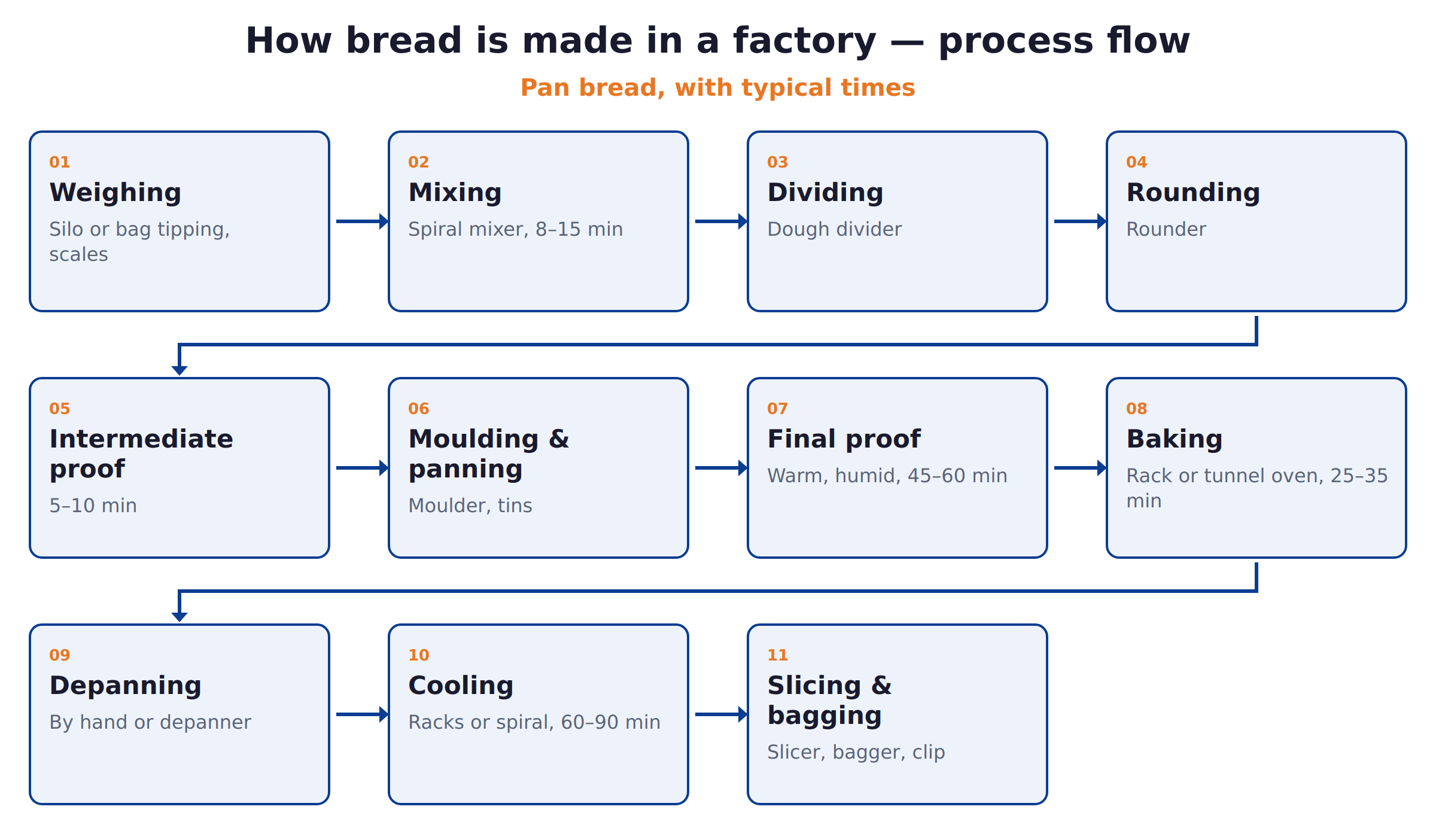
Deck, rotary or tunnel oven?
| Oven | Strength | Limit | Fits |
|---|---|---|---|
| Deck oven | Even baking, flexible for bread, cakes and pastries | Manual loading; output limited by decks | Small bakeries and hotels |
| Rotary rack oven | A whole rack baked at once; consistent colour | Needs proofer and racks to match | Bakeries selling to shops |
| Tunnel oven | Continuous baking at high output | Needs a full line and steady sales | Industrial bread lines |
Electric, gas or diesel heating?
| Heating | Running cost | Watch out for |
|---|---|---|
| Electric | Depends on tariff and surcharges | Large three-phase load; outages stop the bake |
| LPG or gas | Often lower per batch than electricity | Safe installation, ventilation and supply contracts |
| Diesel burner | Works without gas supply | Fuel price, burner maintenance, fumes |
Electricity in Kenya carries pass-through charges on top of the base tariff. In August 2026 the fuel energy cost charge, one of those pass-throughs, was about KES 3.5 for every kWh, which adds up quickly on an electric oven. Ask each seller for the heat input in kW and the fuel or power used per batch, so you can cost a loaf.
Who sells bakery equipment in Kenya
- Local fabricators and jua kali workshops make trolleys, racks, tables and some simple ovens, and repair them.
- Dealers sell imported deck ovens, rotary ovens, mixers and slicers from stock in Nairobi and other towns.
- Chinese factories selling direct offer ovens, mixers and complete bread lines by catalogue.
- Turnkey companies lay out the bakery, supply the line and commission it on your recipe.
No bakery equipment supplier is named or rated here. For a starter bakery, buying from a dealer with stock and a technician nearby is often sensible. For a bread line, ask who will commission it on your flour and recipe and train the bakers.
Growing a bakery: when to add a line
Many Kenyan bakeries grow in steps:
- One deck oven and a mixer: bread, buns and cakes for nearby customers.
- A rotary rack oven: more loaves per hour with steady colour.
- A dough divider, rounder and moulder: loaf weight becomes consistent, which matters for shop pricing.
- A proofer and slicer-bagger: sliced, bagged bread for retail.
- A semi-automatic or continuous line: when you have shop contracts that need the volume every day.
Move to a line when shops will take the bread every day. A line sitting half-used costs more than the hand work it replaced.
Wheat and flour: the input that sets your cost
Kenya grows only a small part of the wheat it uses. A long dry spell in the Rift Valley cut the latest local crop, and imports of about 2.6 million tonnes were expected to cover the deficit, according to the Nation. Russian supply alone was projected at about 1.4 million tonnes in the 2025/26 season, according to The Star. For a bakery, that means flour prices follow world wheat prices and the shilling. Keep flour stock under control and fix your loaf weight with a divider, because every gram counts when flour is imported.
Importing bakery equipment into Kenya
| Step | What it involves |
|---|---|
| Duty | Bakery machinery is typically zero-rated under the EAC common tariff; confirm each HS code |
| VAT | 16%, collected at import |
| IDF | Import Declaration Fee, 2.5% of customs value |
| RDL | Railway Development Levy, 2% of customs value |
| PVoC | KEBS conformity checks in the exporting country where the item is regulated |
| Delivery | Mombasa port, then by SGR or truck |
Worked example: a bakery moving to sliced bread
An illustration only:
| Item | Assumption |
|---|---|
| Today | Deck oven and mixer, selling unsliced loaves and buns locally |
| Goal | Sliced 400 g and 800 g loaves for shops |
| Added equipment | Divider, rounder, moulder, proofer, rotary oven, cooling racks, slicer and bagger |
| Price | From about US$80,000 for a semi-automatic line, depending on output and oven |
| Building | Space for flow from mixing to packing, with cooling before slicing |
| Approvals | Product certification for packed bread and county food premises approval |
How to compare quotes
- Loaves per hour at your loaf weight and bake time.
- Oven type, baking area and heat input in kW.
- Fuel or power per batch.
- Mixer capacity in kg of flour per batch.
- Divider accuracy at your loaf weight.
- Proofer temperature and humidity control.
- Slicer and bagger speed.
- Installation, ventilation and gas or electrical works.
- Commissioning on your recipe, and baker training.
- Warranty and local service.
Mistakes we see
- Buying the oven before checking the power supply. A large electric oven may need a new connection.
- Oven too big for the mixer. The oven waits for dough.
- No cooling space. Warm bread sliced and bagged goes mouldy.
- Unsafe gas installation. Pipes, regulators and ventilation must be installed properly.
- Loaf weight by hand. Weight varies and margins leak.
- Moving to a line without shop contracts.
What we see in Kenya
- Imported wheat. Most of Kenya's wheat is imported, and drought in the Rift Valley pushed the import need to about 2.6 million tonnes for the season.
- Russian supply. Russia was projected to ship about 1.4 million tonnes of wheat to Kenya in 2025/26, up 10% on the season before.
- Flour costs follow the shilling. Because the grain is imported, currency moves change flour prices quickly.
- Power surcharges. A fuel energy cost charge of about KES 3.5 per kWh in August 2026 makes the choice between electric and gas ovens a real cost decision.
- Product certification. Packed bread sold through supermarkets is usually expected to carry KEBS certification; ask your buyers what they require.
- Duty-free machinery, but not cost-free. Bakery machines generally enter without EAC duty, while VAT of 16%, the 2.5% IDF and the 2% RDL still apply.
- PVoC timing. Regulated items need verification before shipment, so allow time in the factory schedule.
- Local fabrication. Racks, trolleys and tables are often made locally, cutting the import list.
Where CISH fits
CISH supplies, installs and commissions complete bread lines from audited factories in China: mixing, dividing, moulding, proofing, baking, cooling, slicing and bagging, with the import into Kenya arranged and the line commissioned on your recipe. For a single oven or mixer, a local dealer is usually the better choice, and we will say so.