Flour is the largest running cost, and much of the wheat used for it is imported, so prices follow world markets and the shilling. Energy is next: many Ugandan bakeries bake with gas or diesel and use electricity for mixers and provers, since small users pay more per unit than the large industrial tariffs of about UGX 203.6–300.4 approved for the first quarter of 2026. Imported equipment usually enters duty-free under the EAC CET, with 18% VAT, and lands at about 1.45–1.60 times ex-works after the corridor from the coast. CISH supplies, installs and commissions complete bakery lines in Uganda.
Step 1: choose your market
| Market | What they buy | What they need from you |
|---|---|---|
| Walk-in and neighbourhood shops | Bread, buns, cakes, doughnuts | Freshness every morning, fair price |
| Schools and institutions | Bread and buns in bulk | Consistent weight, reliable delivery, invoices |
| Supermarkets and distributors | Sliced, wrapped bread with a brand | UNBS certification, barcodes, steady supply, payment terms |
| Cafés and hotels | Rolls, pastries, cakes | Quality and variety |
Step 2: starting capital
| Cost block | Neighbourhood bakery | Bakery supplying supermarkets |
|---|---|---|
| Equipment | Machine set: about US$15,000–45,000 | Semi-automatic line from about US$80,000 |
| Premises and fit-out | Tiled, washable bakery with drainage and ventilation | Larger unit with cooling, slicing and dispatch areas |
| Power and fuel | Three-phase connection, gas installation | Larger supply, gas or diesel ovens, generator |
| Licences and certification | Trading licence, health inspection | Plus UNBS certification |
| Vehicles | A van or motorbikes | A delivery fleet |
| Working capital | Several weeks of ingredients | Plus supermarket payment terms |
Our bakery oven and machine price guide sets out the equipment options.
Step 3: licences and standards
- Business registration and a tax identification number.
- Trading licence from your municipality or district.
- Health inspection of the premises and food handlers.
- UNBS: packed bread sold to shops and supermarkets is expected to meet UNBS standards, and many buyers ask for the UNBS Q-Mark.
- Fire safety for ovens and gas.
Step 4: flour and ingredients
Flour is usually the largest cost, followed by sugar, fat, yeast and fuel. Buy from more than one miller, keep a few weeks of stock, and weigh every dough piece. Bread sold at fixed prices leaves little room for over-weight loaves.
Step 5: energy
Rotary rack ovens and provers use the most energy. Small commercial users pay more per unit than large industrial users, so many bakeries run gas or diesel ovens and keep electricity for mixers and dividers, with a generator for outages. Compare running costs per batch before you choose the oven.
Step 6: staff and the daily rhythm
Bakeries work through the night so bread is ready before shops open. Plan shifts, staff transport and supervision; train staff in hygiene and in safe use of mixers, dividers and ovens. A head baker with experience saves more flour and fuel than any machine.
Step 7: delivery and sales
Bread must reach shops, schools and kiosks early each morning. Plan routes and vehicles, agree order quantities with shops to reduce returns of stale bread, and invoice institutions on time. Cakes, doughnuts and pastries earn more per kilogram of flour and fill the oven between bread bakes.
Step 8: importing equipment
Capital goods usually enter Uganda at 0% under the EAC CET, with 18% VAT; regulated goods need UNBS pre-shipment verification. Equipment comes through Mombasa or Dar es Salaam and travels inland, so allow for freight and time.
The numbers
Cost per loaf is flour and ingredients, energy, labour, packaging, rent, delivery and loan repayments. Work it out for each product, compare with shop prices and what retailers need to earn, and set daily production to what you can sell fresh.
Worked example: a school-supply bakery in Mbarara
A baker in Mbarara sells bread from a small shop with an electric deck oven. Two boarding schools ask for daily bread deliveries. She leases a larger unit, installs a gas rotary rack oven, a spiral mixer, a divider, a moulder and a prover with a generator, gets her premises inspected and applies for UNBS certification for wrapped bread. A van delivers to the schools and nearby shops before 7 a.m. The figures are illustrative.
Common mistakes
- Buying an oven before a good mixer and divider.
- No backup power for mixers and provers.
- Over-weight loaves.
- Too much bread for the orders, leading to returns.
- No UNBS certification for supermarket supply.
What we see in Uganda
- Bread, buns and cakes are everyday products.
- Schools are important bulk buyers.
- Gas and diesel ovens are common.
- UNBS standards apply to packed bread.
- Landed equipment costs are higher because of the inland corridor.
- Imported bakery equipment is usually duty-free; budget for 18% VAT.
Branding and packaging
Once a bakery supplies shops and supermarkets, packaging becomes part of the product. Printed bread bags with the bakery's name, the weight, ingredients, batch and best-before date build trust and help shop owners reorder the right product. Keep the brand simple and consistent across products, and make sure bags are food-grade and seal well so bread stays fresh.
Growing step by step
Many successful bakeries grow in steps: first a reliable oven and mixer with neighbourhood sales, then a divider and prover to raise output, then a rack oven and a delivery van to reach schools and shops, and finally a semi-automatic line for supermarket volumes. Each step is easier to finance when the previous one shows steady sales in your records.
Hygiene and inspection
Inspectors and buyers look at the bakery as much as the bread: clean floors and walls, covered flour bins, pest control, staff in clean clothing and hairnets, hand-wash stations and clean delivery crates. Write a simple cleaning schedule and keep it on the wall, and check it every day. A clean bakery passes inspections and keeps supermarket buyers confident.
Costing each product
Work out the cost of every product you sell, not only bread: buns, cakes, doughnuts and pastries use different amounts of flour, sugar, fat and oven time. Some products that sell well may earn little; others that sell less may carry the margin. Review the figures every month as flour and fuel prices change, and adjust prices or recipes before losses build up.
Where CISH fits
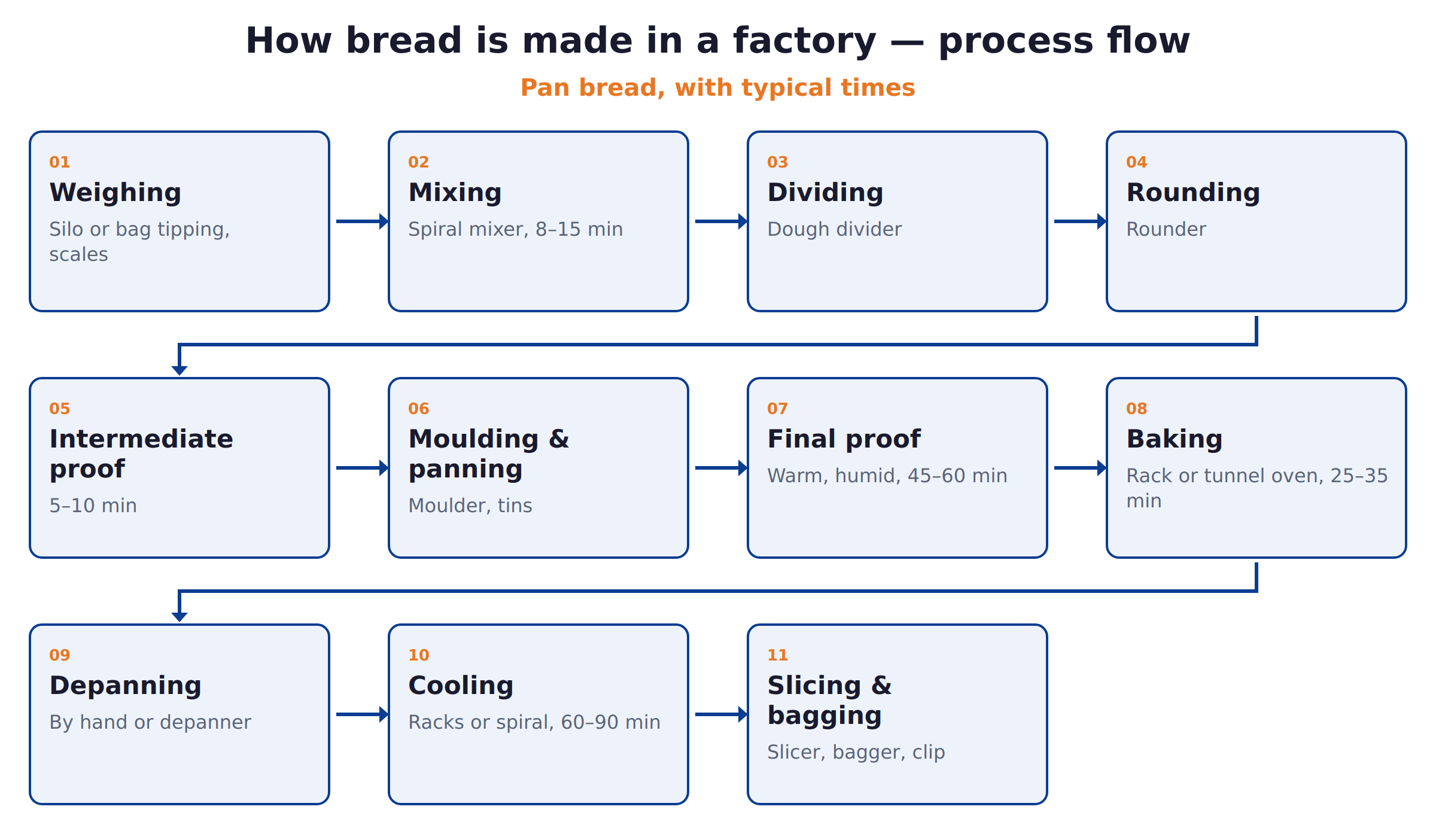
We supply complete bakery lines, mixing, dividing, moulding, proving, baking, cooling, slicing and bagging, from audited factories in China, sized to your products. CISH ships through Mombasa or Dar es Salaam, clears, installs and commissions the line, and trains your bakers. For a single oven or mixer, a local dealer is usually the better buy.