A bakery business in Ghana usually starts with the breads Ghanaians buy every day, sugar bread, butter bread, tea bread and brown bread, plus rolls, pastries and cakes, sold over the counter, through hawkers and kiosks, and to shops and institutions. Many Ghanaian bakeries still use wood-fired ovens; gas and diesel ovens give more even baking and cleaner bread, and electric ovens need a reliable supply, which ECG said in April 2026 was strained by an overloaded distribution network. Packaged bread sold to shops must be registered with the Food and Drugs Authority, and the premises inspected. Imported equipment pays the ECOWAS CET, mostly 5% on machinery, plus the combined 20% VAT, NHIL and GETFund from January 2026, clearing through ICUMS at Tema. Flour is the largest running cost. CISH supplies, installs and commissions complete bakery lines in Ghana.
Step 1: choose your products and market
| Product | Notes |
|---|---|
| Sugar bread | Soft, sweet, the everyday favourite |
| Butter bread | Richer dough, higher price |
| Tea bread | Lighter, popular for breakfast |
| Brown bread and wheat bread | Growing with health-conscious buyers |
| Rolls, meat pies, pastries, cakes | Higher margins per kilogram of flour |
Hawkers and kiosks sell bread by the loaf every morning; shops, schools, hospitals and hotels buy on order; supermarkets want sliced and wrapped loaves with a brand and barcode.
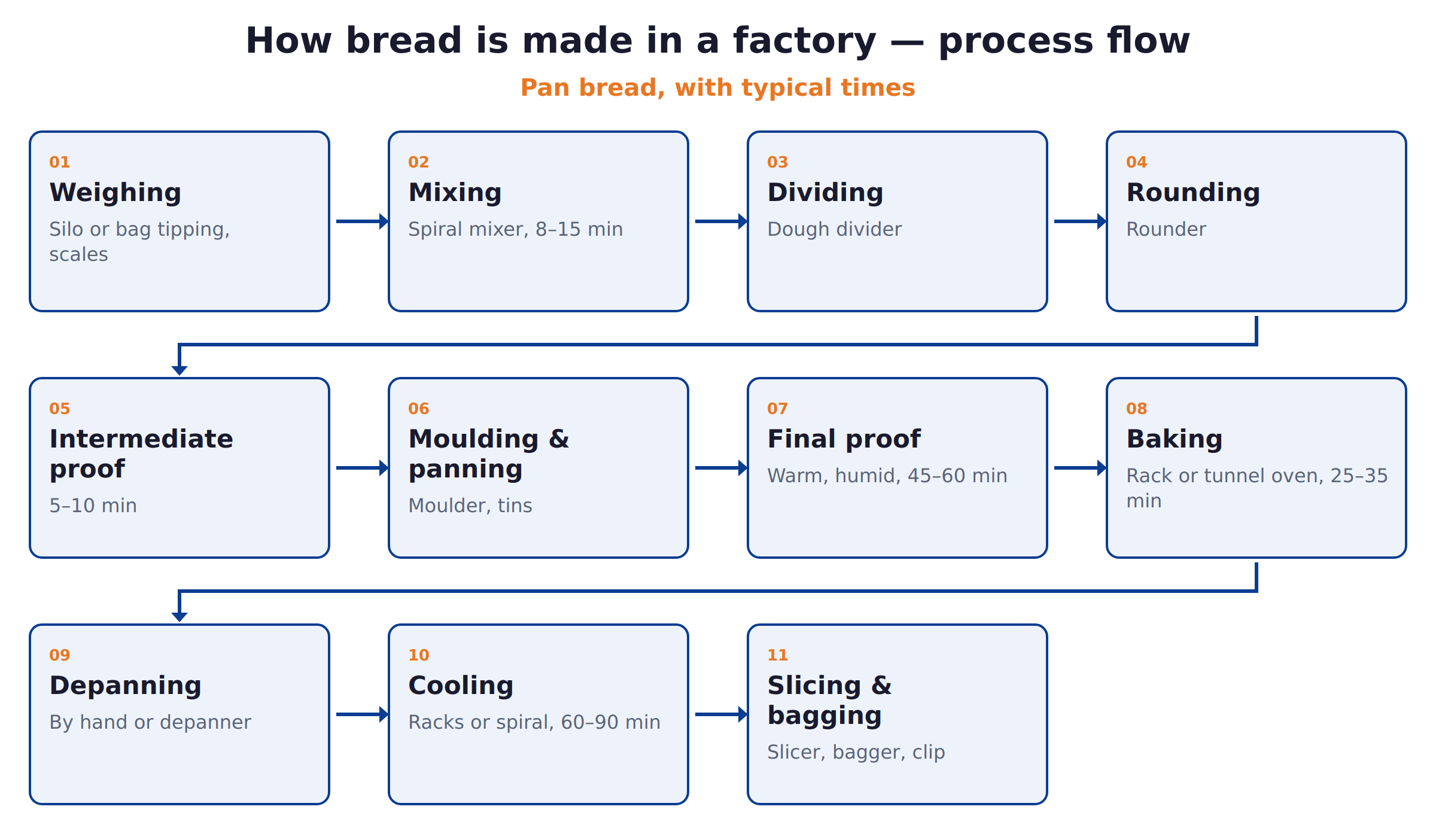
Step 2: equipment by scale
| Scale | Equipment | Indicative price (2026) |
|---|---|---|
| Small bakery | Spiral mixer, dough brake or divider, moulder, prover, deck or rack oven, racks | About US$15,000–45,000 |
| Bread factory, semi-automatic | Larger mixers, divider-rounder, intermediate prover, moulder, final prover, rack or tunnel oven, cooling, slicing and bagging | From about US$80,000 |
| Bread factory, automatic | Continuous dough handling, tunnel oven, spiral cooler, automatic slicing and bagging | About US$250,000–800,000+ |
Our bakery equipment price guide compares the classes across our markets.
Step 3: ovens and fuel
| Oven fuel | Strength | Watch for |
|---|---|---|
| Wood | Cheap fuel, traditional | Smoke, uneven baking, cleanliness, fire risk |
| Gas (LPG) | Even baking, clean | Gas supply and safety installation |
| Diesel | Works without grid power | Fuel cost and fumes |
| Electric | Clean, precise | Needs a reliable, strong supply |
ECG's managing director said in April 2026 that much of the distribution network had exceeded its thermal limits, with an investment plan including about 2,500 distribution transformers. Where supply is uncertain, gas or diesel ovens with a generator for mixers and provers are common.
Step 4: FDA registration and premises
The Food and Drugs Authority registers food products, including packaged bread, and inspects premises. Plan:
- A clean bakery: washable walls and floors, screened windows, hand-wash stations, pest control.
- Separate areas for flour storage, mixing, baking, cooling and packing.
- Staff health checks and protective clothing.
- Labels on packaged bread: name, ingredients, net weight, batch, dates and your address.
District assembly permits are also needed for the premises.
Step 5: flour and ingredients
Flour is usually the largest running cost, followed by sugar, fat, yeast and fuel. Flour prices follow world wheat prices, freight and the cedi, so buy from more than one supplier and keep a few weeks of stock. Weigh dough pieces accurately; a few grams over on every loaf adds up to bags of flour every month.
Step 6: importing equipment
| Charge | 2026 basis |
|---|---|
| Import duty | ECOWAS CET; most bakery machinery at 5% |
| VAT, NHIL and GETFund | Combined 20% from 1 January 2026 under Act 1151 |
| ECOWAS and AU levies | Small percentages on CIF value |
| Clearing | ICUMS at Tema |
The Ghana Ports and Harbours Authority announced measures to ease congestion at Tema in August 2026; allow time for clearing.
Step 7: the numbers
Cost per loaf is flour, other ingredients, fuel or power, labour, packaging, rent, delivery and loan repayments. Calculate it for each bread type, compare with what hawkers and shops pay, and leave a margin for them. Cakes, pies and pastries often earn more per bag of flour than bread.
Worked example: a family bakery in Accra moves to gas
A family bakery in Accra bakes sugar bread in a wood-fired oven and sells through hawkers. Buyers complain about smoky, uneven loaves. The bakery installs a gas rotary rack oven, a spiral mixer, a dough divider, a moulder and a prover, with a generator for the mixer and prover. It registers its sliced butter bread with the FDA and starts supplying two supermarkets, while hawkers keep selling the daily loaves. The figures are illustrative.
Staff, delivery and daily rhythm
A bakery works through the night so bread is fresh by morning. Plan shifts, transport for staff at odd hours, and delivery: hawkers collect at dawn, shops and institutions need deliveries before opening. Train staff in hygiene and safe use of mixers and ovens.
Local workshops and imported equipment
Ghanaian workshops build and repair ovens, racks, trolleys and tables, and can maintain simple mixers. Precision machines such as dividers, moulders, provers with humidity control and slicers are usually imported. Our guide to machinery suppliers in Ghana explains how the two fit together.
Common mistakes
- Wood smoke and uneven baking in a bakery that wants supermarket listings.
- No FDA registration for packaged bread.
- Dough pieces not weighed.
- No backup power for mixers and provers.
- Too little working capital for flour and credit to shops.
What we see in Ghana
- Sugar bread and butter bread are everyday products.
- Wood-fired ovens are still common; gas is growing.
- FDA registration is needed for packaged bread.
- Power supply varies, so backup matters.
- Machinery mostly pays 5% duty plus the combined 20% VAT and levies.
- Hawkers sell much of the daily bread.
Seasons and festivals
Bread demand rises around festivals, Christmas and school openings, and cake orders peak for weddings, funerals and church events. Plan flour stock and staff for these peaks, and use quieter weeks for oven and mixer maintenance. A bakery that can deliver reliably during peak weeks keeps its shop and hawker customers for the rest of the year.
Financing the start
Many bakeries start with savings and a supplier's credit for flour, then finance machines once sales are steady. Lenders want to see records of sales, flour use and costs; keep them from the first day, even for a small bakery, because they make the next step easier.
Where CISH fits
We supply complete bakery lines, mixing, dividing, moulding, proving, baking, cooling, slicing and bagging, from audited factories in China, sized to your loaves a day. CISH ships to Tema, clears, installs and commissions the line, and trains your bakers. For a single oven or mixer, a local supplier is usually the better buy.