Rules matter: since 1 July 2025 Lagos has enforced a ban on single-use plastics below 40 microns, including thin nylon carrier bags, while sachet water film and PET bottles are not affected. CISH supplies, installs and commissions complete blown film and bag lines.
Nylon machine prices, 2026
| What you buy | Typical use | Indicative price (USD, 2026) | Note |
|---|---|---|---|
| Basic bag-making machine | Cutting and sealing bought-in film | From about US$8,000 | Semi-automatic |
| Automatic servo bag-making machine | High-speed carrier, refuse or produce bags | About US$40,000 and up | Better accuracy and speed |
| Blown film extruder | Making your own film from resin | Quoted per configuration | Size by film width and thickness |
| Printing machine | Branded pure water film and bags | Quoted per configuration | Flexographic, number of colours |
| Complete film, print and bag line | Resin to finished bags | Quoted per configuration | Plus recycling for edge trim |
Machinery is priced in US dollars; resin, power and labour are in naira.
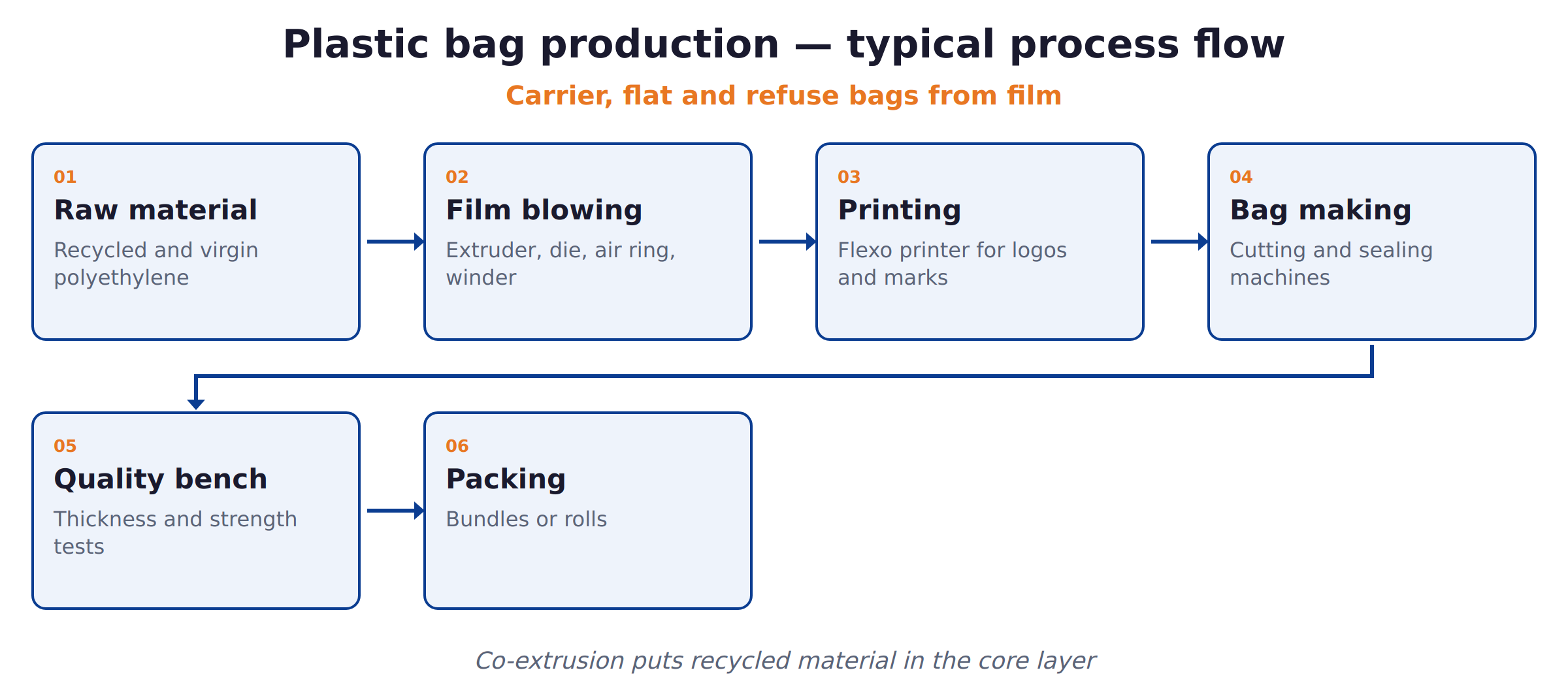
What "nylon" covers in Nigeria
- Pure water film: printed tubular film for sachet water, sold to water producers in rolls.
- Carrier bags: "shopping nylon" for markets and shops.
- Refuse bags and liners.
- Produce and bread bags.
- Industrial and agricultural film.
Each product needs a different film thickness, width and printing. Buyers of pure water film care about consistent thickness, seal strength and print; carrier bag buyers care about price and strength.
The Lagos rules and what they mean for your product
Lagos State began full enforcement of its ban on single-use plastics below 40 microns on 1 July 2025, after an 18-month moratorium announced in January 2024. The ban covers items such as styrofoam food packs, disposable cups, straws, cutlery and thin nylon carrier bags. The state has said that sachet water film and PET bottles are not affected, and nylon carrier bags thicker than 40 microns are exempt. Reports since then point to uneven enforcement, but a new line should be planned for products that remain legal: film for pure water, thicker carrier bags, refuse bags and industrial film. Check the rules in each state you sell to.
What a complete line contains
- Resin handling: hoppers, dryers if needed, colour and additive dosing.
- Blown film extrusion: extruder, die, air ring, tower and winder.
- Printing: flexographic printer for branded film and bags.
- Bag making: sealing and cutting machines, punch for handles.
- Recycling: granulator and pelletiser for trim and rejects.
- Packing.
Who sells nylon machines in Nigeria
- Dealers and importers sell bag-making machines and small extruders, often used.
- Local technicians rebuild and service extruders and bag machines.
- Chinese factories sell extruders, printers and bag machines direct; you handle Form M, freight and clearance.
- Turnkey companies design and commission the whole line.
Ask every seller for output in kilograms per hour at your film thickness and width, and for samples made from your resin.
Worked example: film for pure water producers
An illustration only:
| Item | Example |
|---|---|
| Customer | Sachet water producers buying printed film by the roll |
| Film | Tubular, printed in one or two colours |
| Extruder output | Rated in kg per hour at the film width and thickness |
| Monthly output on two shifts | Depends on rating; size to signed customers |
| Recycling | Trim and rejects reground and fed back |
| Power | Extruder heaters and motor are the largest loads |
Pure water producers switch film suppliers over thickness variation and poor seals; consistent film keeps customers.
Landed cost in Nigeria
| Item | How to plan |
|---|---|
| Machines | Ex-works or FOB |
| Freight and insurance | To the nearest port |
| Duty | ECOWAS CET band for each machine |
| Charges | 7% surcharge on duty, 1% CISS on FOB, 0.5% ETLS on CIF |
| VAT | 7.5% on value plus duties |
| Installation | Extruder erection, electrical connection, trial runs |
How to compare quotes
- Products and film thickness range.
- Extruder output in kg per hour at your width and thickness.
- Screw design and resin types (HDPE, LDPE, LLDPE, recycled).
- Printer type and colours.
- Bag machine speed and bag types.
- Recycling of trim.
- Electrical load and generator size.
- Spare screens, heaters and blades.
- Installation, commissioning and training.
- A line you can visit.
Mistakes nylon producers make
- Building for thin carrier bags. Lagos rules now target bags below 40 microns; plan for products that remain legal.
- Inconsistent thickness. Pure water producers reject film that varies; a better die and air ring pay back.
- No recycling of trim. Edge trim and rejects are resin you have paid for.
- Undersized generator. Extruder heaters draw heavily at start-up.
- Cheap screws for recycled resin. Recycled material wears screws and barrels faster; choose accordingly.
Choose by situation
| Situation | Usual choice |
|---|---|
| Starting with bags from bought film | Bag-making machine only |
| Supplier to pure water producers | Blown film line with printer and winder |
| Carrier bag maker after the Lagos rules | Line making film above 40 microns, with handle punching |
| Producer adding recycling | Granulator and pelletiser for in-house scrap |
What we see in Nigeria
- Lagos rules. The single-use plastics ban below 40 microns has been enforced since 1 July 2025; sachet water and PET bottles are outside it.
- Enforcement varies. The News Agency of Nigeria reported weak enforcement in some markets in August 2025; plan for the rules, not for lax enforcement.
- Power. Extruder heaters and motors run long hours; with about 5.4 GW of grid capacity available nationally, generators are standard.
- Finance. The Central Bank's maximum lending rate was about 33.16% in mid-2026; start with the products you can sell now.
- Tariffs. The ECOWAS CET applies, with machinery generally in the lower bands.
Where CISH fits
CISH supplies, installs and commissions blown film, printing and bag-making lines from audited factories in China, matched to the products that remain legal and sellable, with trial runs on your resin and the import into Nigeria handled. For a single used bag machine, a local dealer is often the quicker option.